
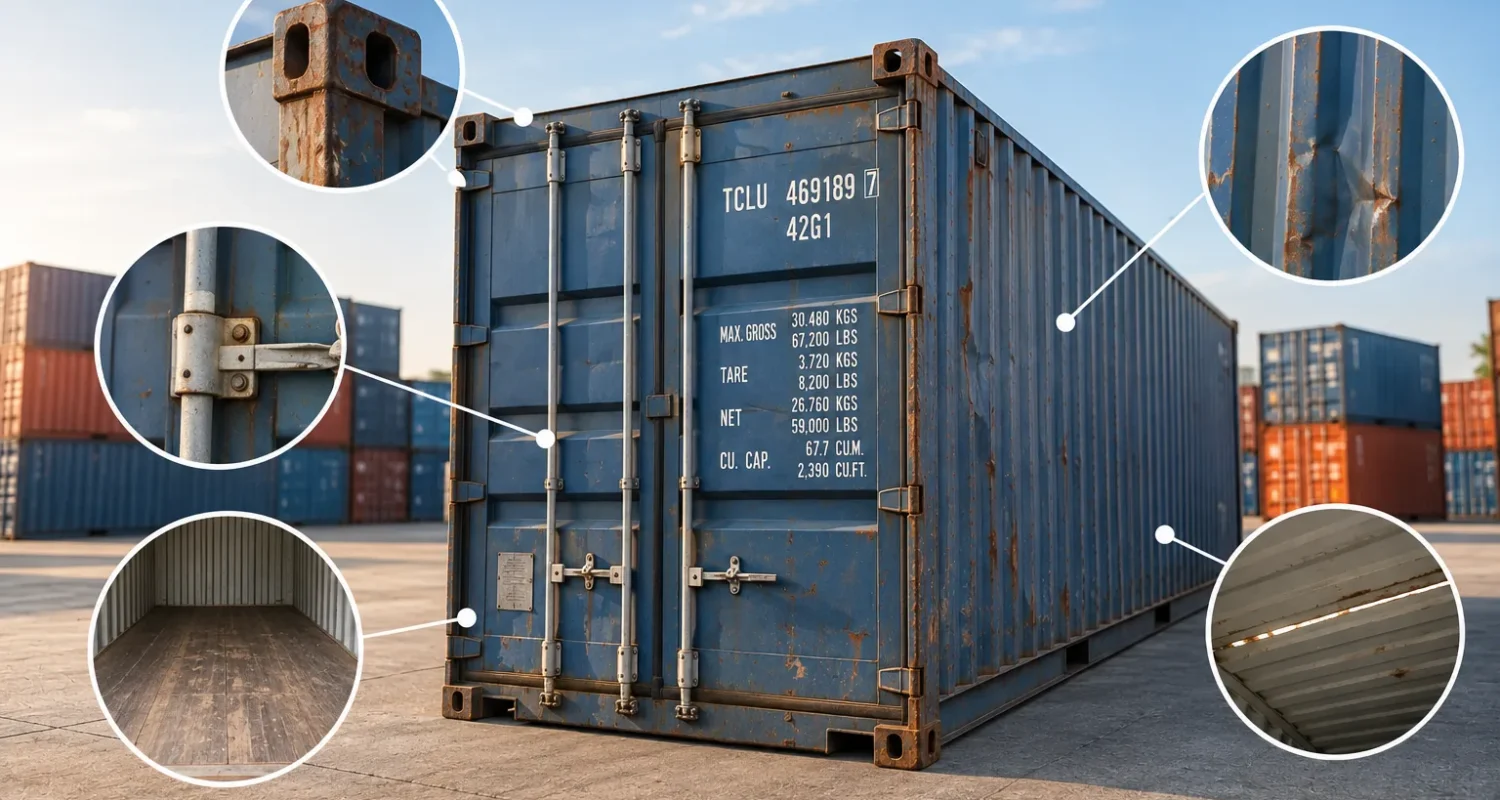
When shopping for a used shipping container, one of the most common conditions you’ll encounter is Cargo Worthy, usually abbreviated as CW. But what exactly makes a container Cargo Worthy? Does it need to look good? Can it have rust, dents or repairs? And does Cargo Worthy automatically mean the container can be exported? Understanding these differences helps you choose the right container — and avoid paying for a condition you don’t actually need.
What Does Cargo Worthy Mean?
A Cargo Worthy shipping container is a used container considered structurally suitable for transporting cargo. The key word here is structurally.
Cargo Worthy is primarily about the container’s functionality and structural condition, not its cosmetic appearance.
Most CW containers have already spent years in commercial shipping service. During that time they’ve been loaded, unloaded, stacked, transported by truck, handled by cranes and exposed to weather. Signs of previous use are therefore completely normal.
What Does a Cargo Worthy Container Look Like?
This is where many first-time buyers have the wrong expectation. A Cargo Worthy container does not need to look new. Depending on its age and history, a CW container may have any of the following:
None of these automatically disqualify a container from being Cargo Worthy. The important distinction is whether the issue is cosmetic or structural.
A faded container with scratches and several dents may still be perfectly functional, while a cleaner-looking container could have a structural issue that matters much more.
Never judge a Cargo Worthy container only by its appearance.
How to Identify a Cargo Worthy Container
When inspecting a CW container, focus on the components that determine whether the unit can perform its intended function.
1. Check the structural frame
Inspect the corner posts, top and bottom rails, cross members and other major structural components. Normal wear is expected. Significant structural deformation or damage should receive much more attention than scratches or faded paint.
2. Open and close the doors
Both cargo doors should be functional and capable of securing the container. Used doors may require more effort than those on a One Trip container, but the locking bars, hinges and handles should function properly.
3. Inspect the floor
Shipping container floors are built for heavy commercial use. A used CW container can have scratches, stains and visible wear. Look instead for significant holes, severe deterioration or structural floor damage.
4. Look at the roof and walls
Inspect for significant structural damage and unintended openings. One useful method is to step inside the container during daylight and close the doors. Visible daylight coming through an unintended opening can indicate a hole that requires further inspection.
5. Look beyond cosmetic rust
Surface rust is common on used shipping containers. What matters is the severity and location of the corrosion. Heavy corrosion that has compromised the steel is very different from normal surface rust.
Can a Cargo Worthy Container Have Dents or Repairs?
Dents: yes, and they’re expected
Dents are extremely common on used shipping containers. These units have spent years moving through ports, depots, ships and trucks, and cosmetic dents don’t automatically affect their ability to perform.
If cosmetic appearance matters to your project, consider a One Trip container instead of expecting a used CW container to look new.
Repairs: yes, and they’re normal
Repairs and patches are part of the normal working life of commercial shipping equipment. A visible repair doesn’t automatically mean the container is in poor condition.
What matters is whether the repair is functional and whether the container meets the condition being offered.
What Are Cargo Worthy Containers Used For?
CW containers are popular because they provide a balance between functionality and cost. Common uses include:
- Cargo transportation
- Commercial storage
- Construction storage
- Industrial equipment storage
- Agricultural storage
- Workshops
- Inventory storage
- Container modifications
- Domestic transportation
- International transportation, when applicable requirements are satisfied
They’re also an excellent storage option for buyers who want a used container in a stronger functional condition than they may need from a basic storage unit.
Does Cargo Worthy Mean CSC Certified?
Not necessarily. This is especially important if you’re purchasing a container for international transportation.
A container being described as Cargo Worthy refers to its condition. A particular international shipment may require a current inspection, CSC-related documentation or other certification.
Planning to export a loaded shipping container? Tell your supplier before purchasing so the appropriate requirements can be confirmed for your specific shipment.
Cargo Worthy vs. Wind & Watertight
Both CW and WWT containers are used equipment, but they’re generally purchased for different purposes. A Cargo Worthy container is associated with structural suitability for transporting cargo. A Wind & Watertight container is generally purchased for stationary storage where the primary requirement is keeping contents protected from normal weather.
| What you’re comparing | Cargo Worthy (CW) | Wind & Watertight (WWT) | One Trip |
|---|---|---|---|
| Used equipment | Yes | Yes | No |
| Structurally suited to carry cargo | Yes | Not the purpose | Yes |
| Protects contents from weather | Yes | Yes | Yes |
| Cosmetic appearance | Signs of use | Signs of use | Near new |
| Rust, dents, patches and repairs | Normal | Normal | Rare |
| Typical purpose | Transport and heavy-duty storage | Stationary storage | Modifications and visible sites |
| Export documentation included | Confirm first | Not typical | Confirm first |
If you’re simply putting tools or equipment inside a container on your property, you may not need to pay more for Cargo Worthy.
Is Cargo Worthy Right for You?
Consider CW when your priorities are structural integrity, functionality and used-container pricing. If one of the priorities below matters more, another condition may fit your project better.
Choose Cargo Worthy
You need a used container that is structurally suited to carry cargo, and you’re comfortable with cosmetic wear.
Choose One Trip
The container will be visible, painted or modified, and it needs to look close to new.
Choose Wind & Watertight
The container stays in one place and only needs to keep its contents protected from normal weather.
Consider AS-IS
You’re comfortable accepting defects and potentially making repairs yourself.
Inspect First. Pay After Approval.
At SpotBuy Containers, we believe customers should understand what they’re buying before completing their purchase. That’s why our process is simple: inspect first, pay after approval.
When depot inspection is available, inspect your assigned container and verify that it meets the condition being offered before approving it. Focus on the doors, floor, roof, walls and structure — not whether you like the color or whether the container has a cosmetic scratch. If exterior appearance is critical, ask about a One Trip container instead.
Cargo Worthy at a glance
Frequently Asked Questions
What does CW mean on a shipping container?
CW stands for Cargo Worthy, a condition commonly used for structurally suitable used cargo containers.
Can Cargo Worthy containers have rust?
Yes. Surface rust is common. The severity and structural impact are more important than the presence of cosmetic rust itself.
Can CW containers have dents?
Yes. Dents, scratches, faded paint and repairs are normal characteristics of used containers.
Is a Cargo Worthy container new?
No. CW containers are generally used commercial shipping equipment.
Can I use a CW container for storage?
Absolutely. Cargo Worthy containers are commonly used for commercial, industrial, construction and personal storage.
Can I export a Cargo Worthy container?
Potentially, but additional inspection or certification requirements may apply to your specific shipment. Confirm these requirements before purchasing.
Looking for a Cargo Worthy shipping container?
SpotBuy Containers supplies 20ft and 40ft Cargo Worthy shipping containers in locations across Canada and the USA, subject to local inventory. Check current CW availability and pricing in your area.
Check availability and pricing