Need an affordable shipping container for storage? A Wind & Watertight container, commonly called WWT, may be exactly what you need.
WWT containers are among the most popular used shipping containers for stationary storage because buyers get the durability and security of a steel container without paying for a newer One Trip unit or a condition intended for cargo transportation. But there’s something every buyer should understand: Wind & Watertight describes functionality, not beauty.
What Does WWT Mean?
WWT stands for Wind & Watertight. These are used shipping containers intended to provide an enclosed space that protects the interior from normal wind and rain.
WWT containers have generally spent years in commercial service before being retired from regular cargo transportation. That makes them particularly attractive for customers who need a container primarily for stationary storage.
What Does a WWT Container Look Like?
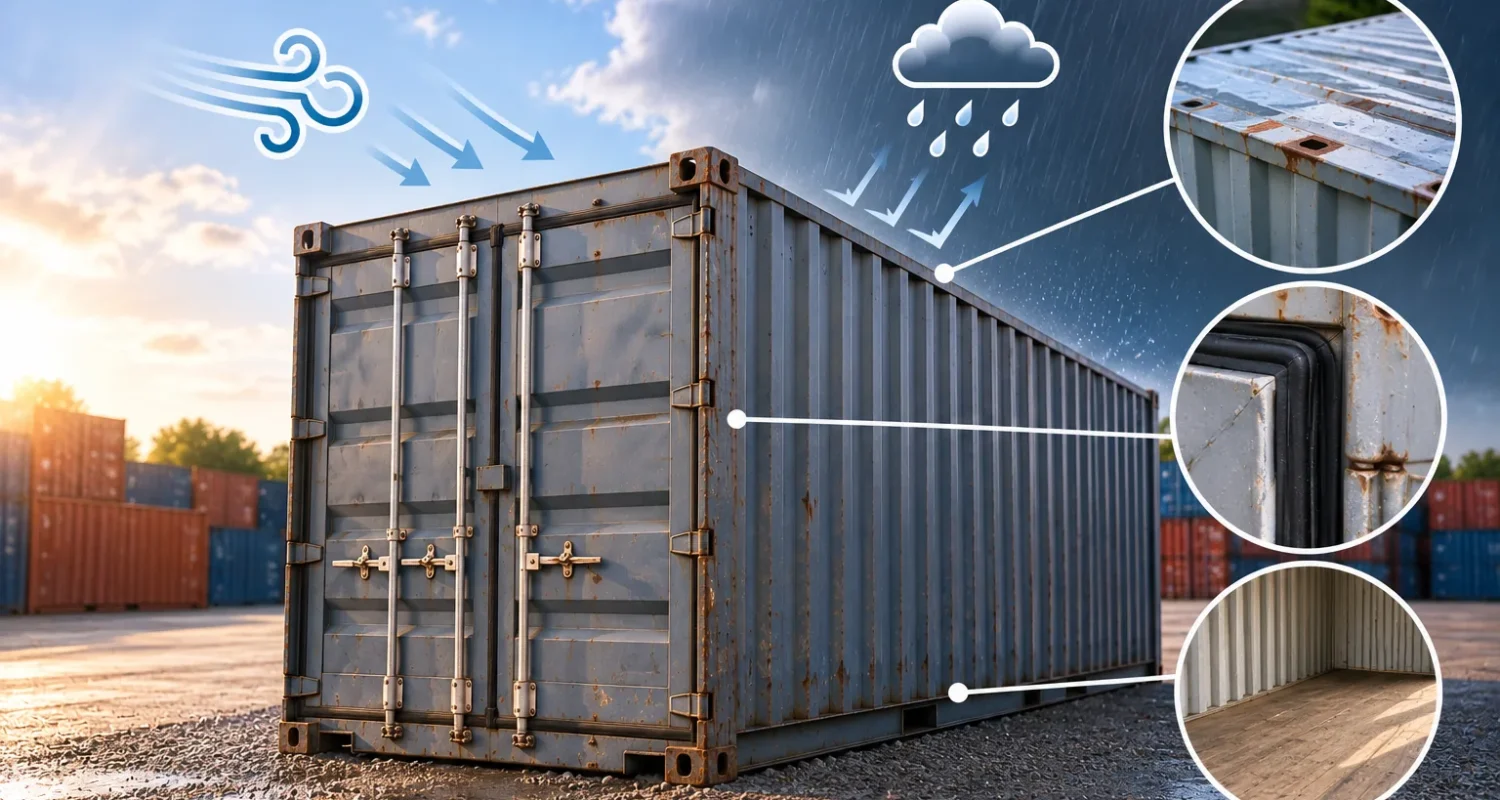
WWT containers look used, because they are. Some may be relatively clean. Others can show substantial evidence of their previous working life. You may see:
This is normal. WWT is not a cosmetic grade. If you need a container that looks attractive outside your business or home, a used WWT unit may not be the best choice unless you’re planning to paint or modify it.
How to Identify a Wind & Watertight Container
For a WWT container, your inspection should focus heavily on whether it can protect the contents from normal weather.
1. Step Inside and Close the Doors
This is one of the simplest inspection techniques. During daylight, step inside and close the doors. Look around the walls and roof for unintended points of daylight. A visible hole could allow water to enter and should be investigated before you approve the unit.
2. Inspect the Roof
Look for significant damage, holes and areas where water could potentially enter. Dents themselves aren’t necessarily a problem. You’re trying to determine whether the roof still performs its intended function.
3. Inspect the Doors and Seals
Make sure the doors close. Look at the rubber seals around them and check for major deterioration or missing sections that could compromise weather resistance.
4. Inspect the Floor
Used flooring will rarely look new. Scratches and stains can be normal. Pay more attention to major holes, severely soft areas or significant deterioration.
5. Check the Walls
Surface rust and dents are common. Holes and severe corrosion deserve more attention because they may affect the container’s ability to keep weather outside.
Rust and Dents: What’s Normal on a WWT Container?
Can it have rust? Yes.
Surface rust is extremely common on older shipping containers. A WWT container does not have to be rust-free. What matters is the difference between surface corrosion and severe corrosion that creates holes or compromises functionality. That’s why physical inspection is so valuable.
Can it have dents? Absolutely.
Dents are expected on used shipping equipment. A dent doesn’t automatically mean water will enter or that the unit can’t be used for storage. For a WWT buyer, functionality should generally matter more than cosmetic perfection.
What Are WWT Containers Used For?
Wind & Watertight containers are particularly useful for stationary applications such as:
For many storage projects, paying extra for a Cargo Worthy or One Trip container may simply be unnecessary.
Can You Ship Cargo in a WWT Container?
WWT and Cargo Worthy are different condition categories. If your intention is to transport cargo, particularly internationally, don’t assume that a container sold as WWT meets the structural, inspection or certification requirements applicable to your shipment. Tell your supplier exactly how the container will be used before purchasing.
WWT vs. Cargo Worthy vs. One Trip
Here’s the simplest distinction: WWT = primarily stationary storage. CW = structural condition associated with cargo transportation. Both are used containers, and both can show significant cosmetic wear. A One Trip container is newer, with cleaner paint, fewer dents, less corrosion and a cleaner interior.
Choose One Trip when…
Appearance matters. For a retail project where the container will be highly visible, One Trip may make much more sense.
Choose WWT when…
Function matters more than looks. For a construction site where appearance doesn’t matter, WWT can be an excellent solution.
| Feature | WWT | Cargo Worthy | One Trip |
|---|---|---|---|
| Stationary storage | Ideal | Yes | Yes |
| Cargo transport | Not assumed | Intended | Yes |
| Cosmetic wear | Expected | Expected | Minimal |
| Price | Most economical | Mid-range | Higher |
Should You Buy a WWT Container?
WWT is ideal when your priorities are affordable storage, security and weather protection. You’re generally accepting cosmetic imperfections in exchange for a lower price than newer equipment.
Key tip
Inspect first. Pay after approval. Don’t reject a functional storage container simply because it’s scratched or faded, but don’t approve a container that doesn’t meet the WWT condition being offered.
At SpotBuy Containers, we encourage customers to focus on what actually matters for the condition they’re purchasing. Use this checklist:
- 🚪Doors and sealsDoors close properly and rubber seals aren’t badly deteriorated or missing.
- 🏠RoofNo holes or damage where water could enter. Dents alone are fine.
- 🧱WallsSurface rust is OK; holes and severe corrosion deserve attention.
- 🪵FloorNo major holes or severely soft areas.
- 💡Daylight testClose the doors inside and look for unintended points of light.
WWT at a Glance
Frequently Asked Questions
What does WWT mean?
WWT means Wind & Watertight.
Does WWT mean waterproof?
WWT is commonly used to describe a container intended to prevent normal wind and rain from entering. It shouldn’t be interpreted as a guarantee for every possible weather or flooding condition.
Can WWT containers have rust?
Yes. Surface rust and cosmetic corrosion are common.
Can WWT containers have dents?
Yes. Dents are normal on used shipping containers.
Is WWT good for storage?
Yes. Stationary storage is one of the most common uses for WWT containers.
Is WWT the same as Cargo Worthy?
No. Cargo Worthy and WWT are different condition categories with different intended applications.
Looking for a WWT Shipping Container?
SpotBuy Containers supplies used 20ft and 40ft Wind & Watertight containers for storage and other applications, depending on local availability. Contact us to check current inventory and pricing near you.
Check Inventory & Pricing