If price is your biggest consideration when buying a shipping container, you may encounter containers advertised as AS-IS. They can be some of the least expensive containers on the market. But there’s a reason.
Unlike Cargo Worthy or Wind & Watertight equipment, an AS-IS container is offered in its existing condition, and buyers should not assume that it meets CW or WWT standards. That doesn’t necessarily make it a bad purchase. It simply means you need to understand exactly what you’re buying.
What Does AS-IS Mean?
An AS-IS shipping container is sold in its current condition. The condition can vary significantly from one container to another. An AS-IS container may have relatively manageable defects—or it may require substantial repair.
This is why AS-IS containers should be evaluated individually, not based solely on the condition name.
What Does an AS-IS Container Look Like?
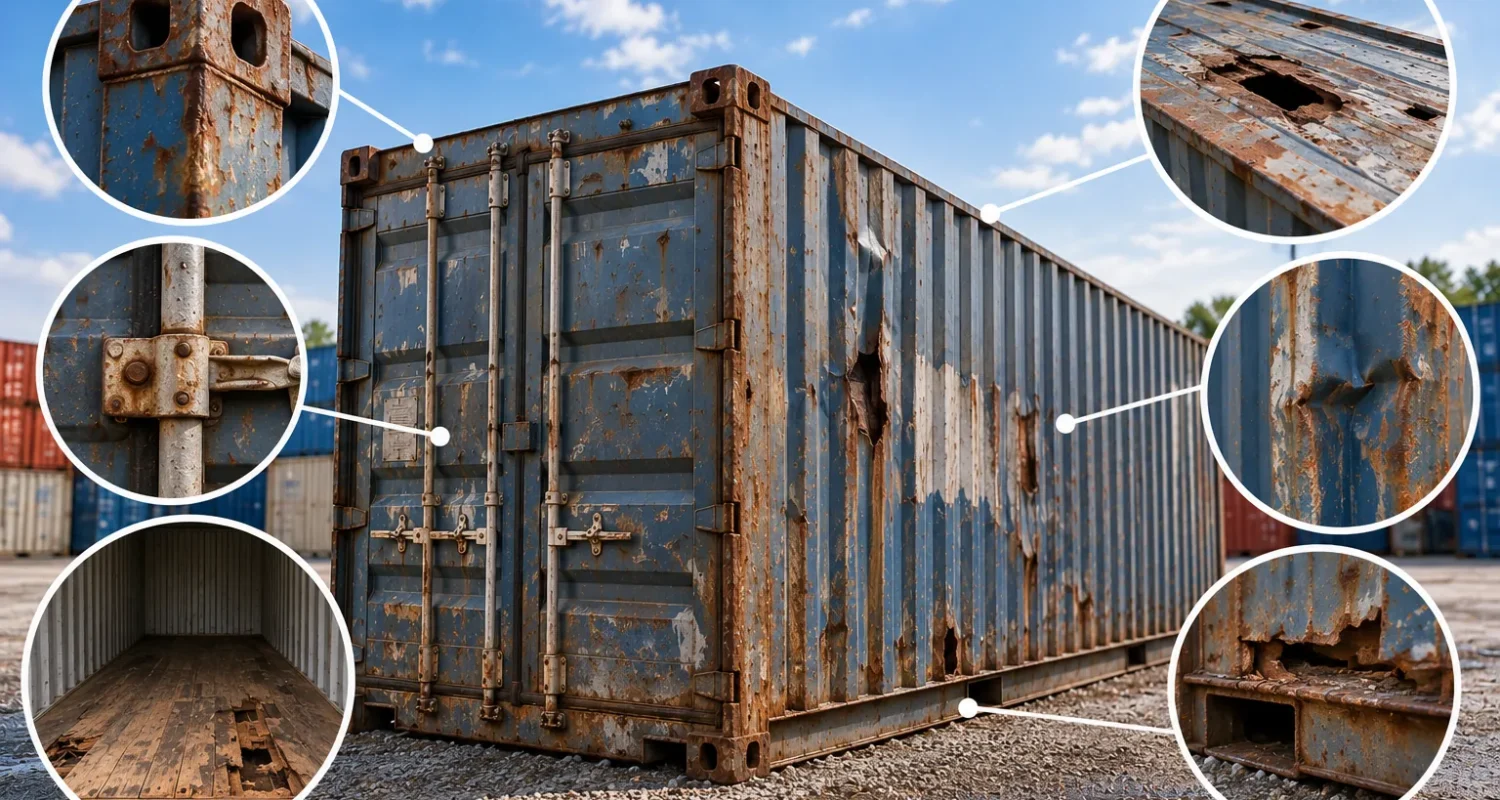
There’s no universal answer. Depending on the individual unit, an AS-IS container could have:
Heavy surface rust
Significant corrosion
Holes
Roof damage
Wall damage
Large dents
Damaged doors
Damaged door seals
Floor damage
Previous repairs
Structural deformation
Missing or damaged components
Heavy cosmetic wear
Dato clave
Not every AS-IS container will have all these problems. That’s exactly the point: condition varies.
Does AS-IS Mean the Container Is Unusable?
Not necessarily. Some AS-IS containers may still have useful life remaining for the right project.
The issue is that you shouldn’t assume the unit will meet a higher condition standard without inspecting it. A buyer who understands container repairs and already plans to cut, weld, reinforce or modify the unit may view certain defects very differently from someone looking for immediate dry household storage.
Planning modifications
Certain defects may matter very little if you already plan to cut, weld, reinforce or modify the unit.
Needing dry storage now
The same defects can become a serious problem if you want immediate, weather-protected household storage.
How to Inspect an AS-IS Shipping Container
Inspection is particularly important with AS-IS equipment. Use this checklist:
Holes and Storage: What to Expect
Can an AS-IS Container Have Holes?
Yes. You should not assume that an AS-IS container is Wind & Watertight. If keeping rain out is essential, verify the actual condition of the unit before buying—or consider purchasing WWT instead.
Are AS-IS Containers Good for Storage?
They can be, depending on their individual condition and what you’re storing. If the unit has holes or damaged seals, repairs may be required before it can protect moisture-sensitive items.
For basic applications where weather protection isn’t critical, certain AS-IS units may still be useful. The intended use should drive the decision.
What Are AS-IS Containers Used For?
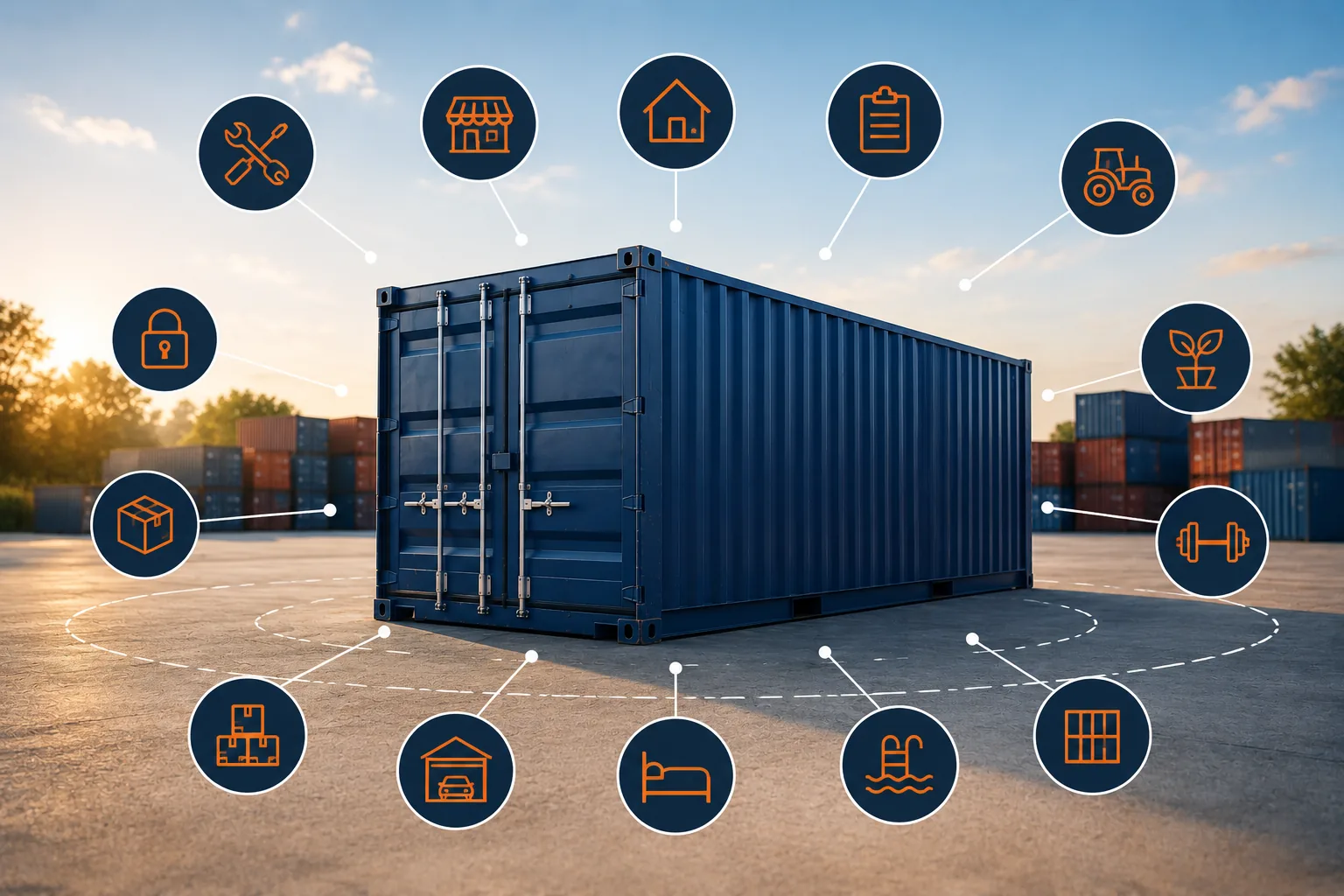
Depending on their condition, buyers may use them for:
Repair projects
Container modifications
Farm projects
Workshops
Non-sensitive equipment storage
Parts
Material storage
Custom construction
Projects involving significant cutting and welding
Specialized industrial applications
Tip
An AS-IS container can make particular sense when you’re already planning major modifications. Why pay a premium for cosmetic condition if you’re going to remove half the walls anyway?
AS-IS vs. Wind & Watertight vs. Cargo Worthy
This distinction is important.
AS-IS vs. WWT
Weather protection
With WWT, the container is offered as Wind & Watertight for its intended storage function. With AS-IS, you shouldn’t assume that level of condition. An AS-IS unit may require repairs before it provides suitable weather-protected storage. That’s one reason AS-IS containers are generally priced below WWT units.
AS-IS vs. CW
Transportation
The difference is even greater if transportation is involved. Cargo Worthy is associated with structural suitability for transporting cargo. AS-IS makes no such assumption.
| Condition | Weather-protected storage | Cargo transport | Typical price level |
|---|---|---|---|
| AS-IS | Don’t assume | Don’t assume | Generally lowest |
| Wind & Watertight | Intended for storage | Not its purpose | Above AS-IS |
| Cargo Worthy | Verify | Structurally suitable | Varies |
Importante
If you need the container for cargo transportation, buying AS-IS with the expectation that it can automatically be shipped is not a good approach. The container would need to satisfy whatever condition, inspection and certification requirements apply to the intended movement.
Is the Cheapest Container Actually the Cheapest Option?
Not always. Suppose an AS-IS container saves you money upfront but then requires door repairs, welding, floor work and transportation to a repair facility. Your final cost may be higher than purchasing WWT from the beginning.
On the other hand, if you’re a fabricator who can make those repairs yourself—or you’re already cutting and modifying the container—the lower initial price can be attractive.
That’s why the question shouldn’t simply be:
It should be:
Who Should Consider an AS-IS Container?
AS-IS can make sense for:
Experienced container buyers
Fabricators
Contractors
Buyers capable of making repairs
Modification companies
Agricultural projects
Customers whose applications don’t require WWT or CW condition
For a first-time buyer who simply wants immediate, weather-protected storage, WWT may be a more straightforward option.
Inspect Before You Buy an AS-IS Container
Of all the container conditions, this is where inspection can be particularly valuable. Understand exactly what defects you’re accepting and what repairs may be necessary.
El enfoque de SpotBuy Containers
Inspect First. Pay After Approval. When inspection is available at the depot, evaluate the assigned container before completing payment.
With AS-IS equipment, don’t assume a defect is included or excluded. Inspect the actual unit and understand its condition.
AS-IS Containers at a Glance
Frequently Asked Questions
What does AS-IS mean when buying a container?
It means the container is sold in its existing condition. Buyers shouldn’t assume that it meets WWT or Cargo Worthy standards.
Can an AS-IS container have holes?
Yes. Holes and other defects are possible.
Is an AS-IS container Wind & Watertight?
Not necessarily. If you specifically require weather-protected storage, verify the unit or consider a WWT container.
Can you repair an AS-IS shipping container?
Many defects can potentially be repaired, but feasibility and cost depend on the individual container.
Why are AS-IS containers cheaper?
They’re generally sold at a lower price because the buyer accepts the existing condition and the unit may require repairs.
Who should buy an AS-IS container?
They’re particularly suitable for experienced buyers, fabricators, modification projects and applications where the buyer understands and accepts the unit’s existing defects.
Looking for an Affordable Used Shipping Container?
SpotBuy Containers offers shipping containers in different conditions depending on inventory, including AS-IS, Wind & Watertight, Cargo Worthy and One Trip equipment. Availability varies significantly by location, especially for AS-IS units. Contact us to check current inventory and determine which condition makes the most sense for your project.
Check Current Inventory