
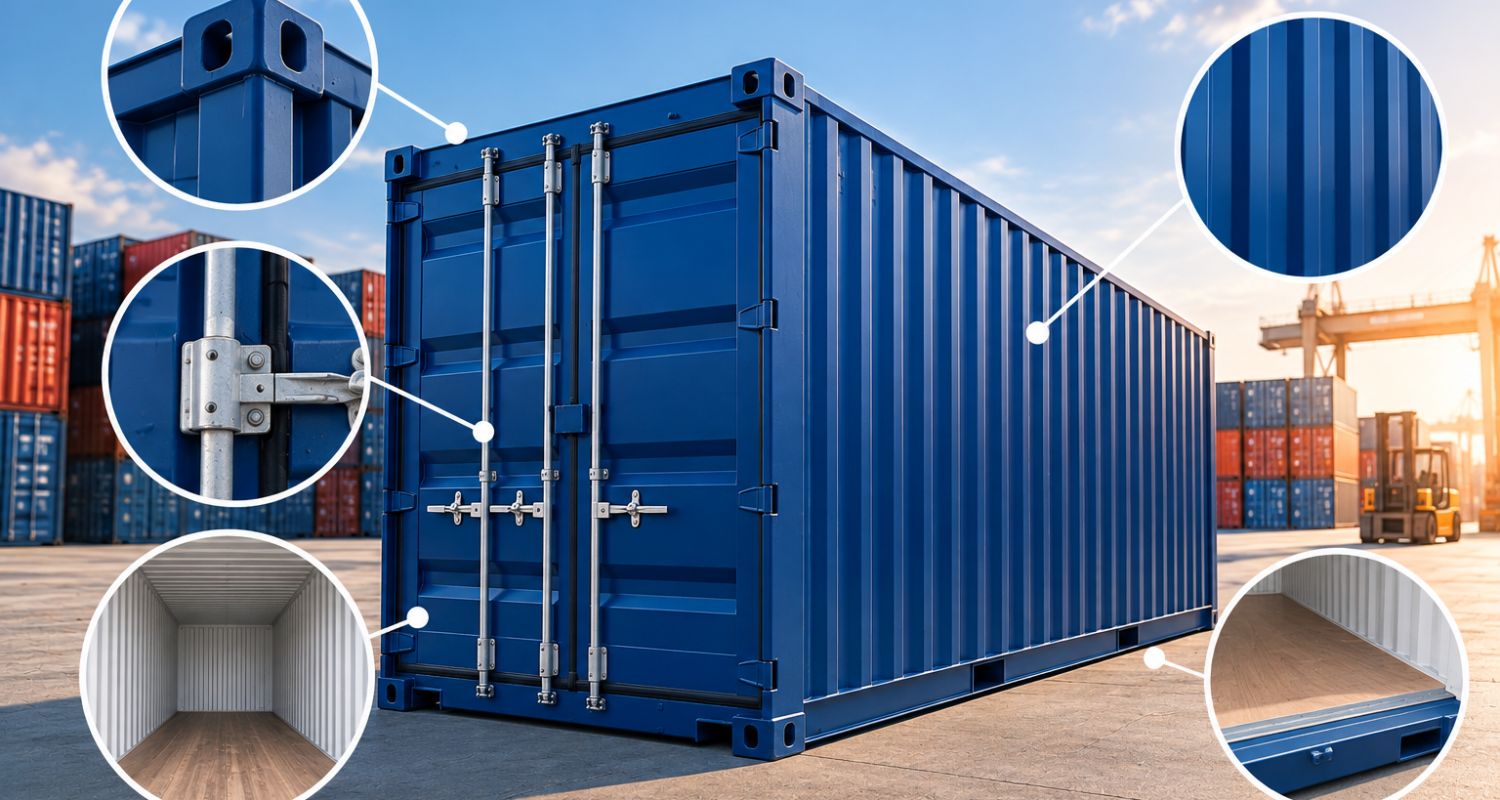
You’ve probably seen shipping containers advertised as “new” or “One Trip.” But if it’s new, why is it called One Trip? The answer has to do with how shipping containers reach North America. A One Trip container is generally the newest condition available in the retail container market, and it’s the preferred choice for customers who care about appearance, longevity and minimal previous use. Here’s what you should know before paying the premium for one.
Why Is It Called a One Trip Container?
Most shipping containers are manufactured overseas. Instead of transporting a brand-new empty container to its destination market, it can be used to carry cargo on its initial journey. After arriving, the container is sold into the local market. That’s where the name One Trip comes from.
You may also hear it called:
One Tripper
One Trip container
New container
New shipping container
Is a One Trip Container Really New?
One Trip containers are commonly sold as new containers, but “new” shouldn’t be confused with never handled. The container still has to move from the factory through terminals, ships, trucks, cranes and depots.
What minor wear can a One Trip container have?
- Scratches
- Scuff marks
- Small dents
- Paint imperfections
- Handling marks
- Minor surface marks
This is normal for industrial transportation equipment. A One Trip container should generally look substantially newer than a used CW or WWT container, but expecting it to look like an untouched consumer product isn’t realistic.
What Does a One Trip Container Look Like?
Compared with used shipping containers, the difference is usually easy to see. Expect:
Newer paint, minimal corrosion, fewer dents and scratches
Cleaner walls, cleaner interior and newer flooring
Newer door seals and smooth-operating doors
Limited evidence of previous cargo use
One Trip containers also tend to provide a more uniform appearance for projects where aesthetics matter.
How to Identify a One Trip Container
Start with its overall condition. The paint, flooring, doors and interior should all show very limited wear compared with containers that have spent years in shipping service.
You can also examine manufacturing information and container markings to better understand the unit’s age and history.
One Trip doesn’t mean flawless. Minor transportation and handling marks can be completely normal.
Why Are One Trip Containers More Expensive?
You’re paying for newer equipment. Used containers can spend many years moving cargo before entering the resale market. A One Trip container enters that market near the beginning of its useful life.
The premium typically reflects:
Newer manufacturing date
Less previous use and lower existing wear
Better cosmetic appearance and cleaner interior
Newer flooring and seals
Longer potential service life
Whether that premium makes sense depends entirely on your project.
What Are One Trip Containers Best Used For?
One Trip containers are especially attractive for projects where appearance matters. Common applications include:
Container homes and residential projects
Retail stores, pop-up shops, restaurants and cafés
Offices, workshops, commercial buildings and high-visibility locations
Custom modifications and long-term storage
They’re also popular with buyers who simply want the newest container available.
When Does Paying for One Trip Make Sense?
Tool storage
Imagine you need a container behind a warehouse to store construction tools. You may not care whether it’s scratched or faded. WWT could be perfectly suitable.
Customer-facing retail space
Now imagine you’re modifying a container into a customer-facing retail space. Starting with a cleaner and newer One Trip container can make much more sense.
The best condition isn’t necessarily the most expensive condition. It’s the condition that fits the project.
One Trip vs. Cargo Worthy vs. WWT
One Trip
A One Trip container has seen minimal service. It provides newer condition and better typical appearance at a premium.
Cargo Worthy
A CW container has typically spent years transporting cargo, so it may have substantially more dents, rust, faded paint and previous repairs. It can provide excellent functionality at a lower cost.
One Trip vs. WWT
The difference is even greater with WWT. WWT containers are primarily popular for affordable stationary storage and can show substantial cosmetic wear.
If you’re buying purely for storage and appearance isn’t important, paying extra for One Trip may not be necessary. If aesthetics matter, One Trip is usually the better starting point.
| Feature | One Trip | Cargo Worthy (CW) | WWT |
|---|---|---|---|
| Previous use | Minimal | Years of service | Most wear |
| Cosmetic appearance | Best | Variable | Substantial wear |
| Price | Premium | Lower | Most affordable |
| Best for | Visible projects | Functional use | Stationary storage |
Can You Choose the Color of a One Trip Container?
Color availability depends on the supplier, manufacturer and inventory available in a particular market.
One Trip containers can provide more predictable appearance than mixed-color used inventory, but you should always confirm color requirements before ordering if a specific color is essential to your project.
Should You Buy a One Trip Container?
Consider One Trip when your priorities are:
Appearance + newer equipment + long-term value. If those aren’t important to you, a used container may provide a more economical solution.
Inspect Your One Trip Container Too
Inspection isn’t only for used containers. Even One Trip units should be checked for transportation or handling damage.
Look at these areas and verify that the container meets the condition being offered:
- 🚪Doors and seals
- 🪵Floor
- 🧱Walls
- 🏠Roof
- 🔍Overall appearance
At SpotBuy Containers, our philosophy remains simple: Inspect First. Pay After Approval.
One Trip at a Glance
Frequently Asked Questions
Is One Trip the same as new?
One Trip containers are commonly marketed as new shipping containers. They have typically completed one cargo journey from their manufacturing region to the destination market.
Can a One Trip container have scratches?
Yes. Minor scratches and handling marks can occur during transportation.
Can a One Trip container have dents?
Minor dents can occur. One Trip doesn’t mean cosmetically flawless.
Why are One Trip containers more expensive?
They have significantly less previous use and generally offer better cosmetic condition and a longer remaining service life than older used equipment.
Are One Trip containers good for modifications?
Yes. Their newer condition makes them especially popular for offices, homes, retail spaces and other modification projects.
What sizes are One Trip containers available in?
20ft and 40ft containers are common, with availability varying by market. Standard and High Cube configurations may also be available.
Looking for a One Trip Shipping Container?
SpotBuy Containers offers 20ft and 40ft One Trip shipping containers, including Standard and High Cube options depending on location and availability. Contact us to check current One Trip inventory and pricing in your area.
Check One Trip Inventory